

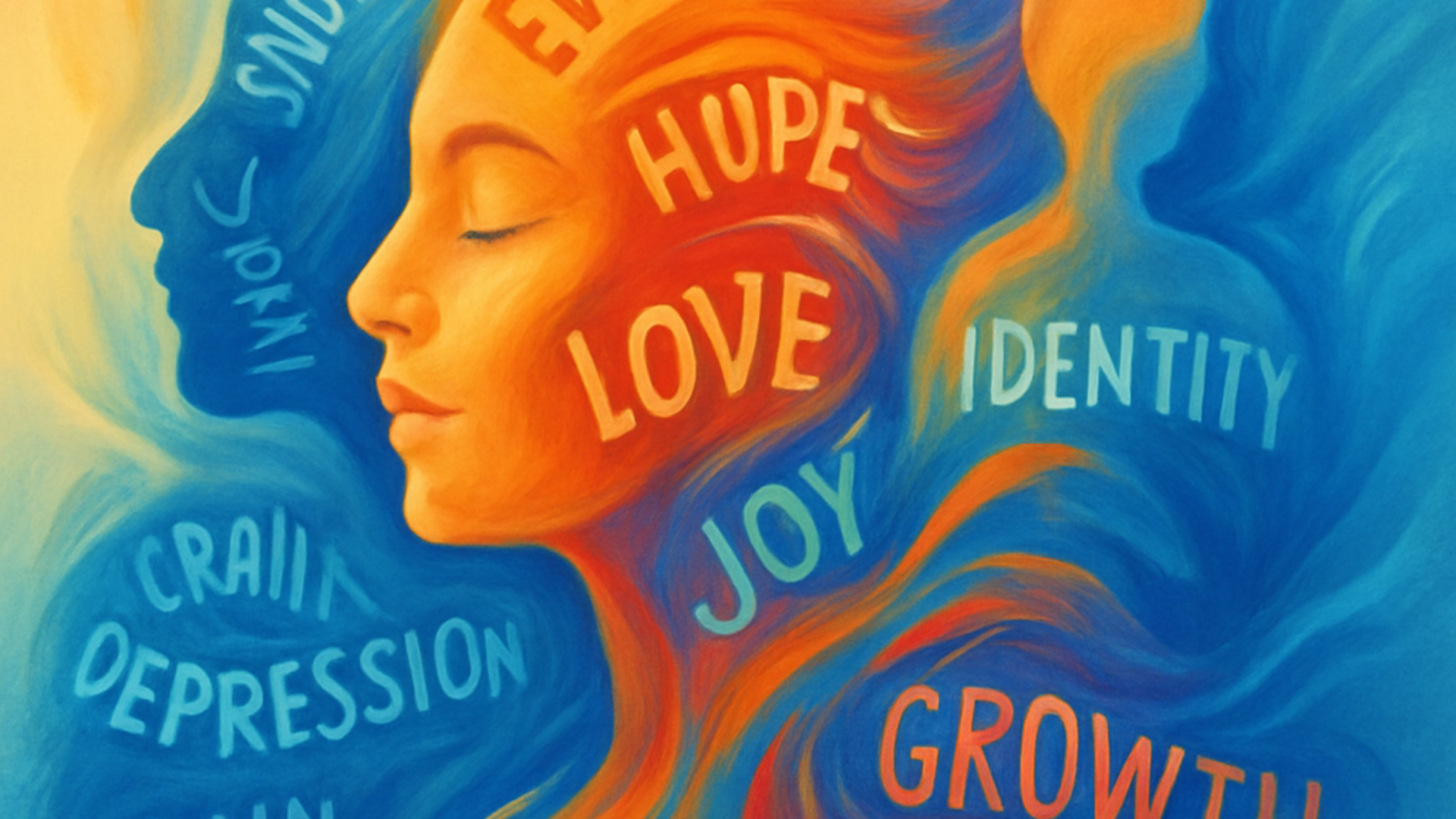
Emotional words are more powerful than we often realize.
They don’t just describe what we feel.
They influence how we feel.
The words we connect with consciously or unconsciously
shape how we interpret our experiences, define our identity, and move through life.
What Are Emotional Words
Emotional words are words that carry strong feeling and meaning.
Unlike neutral language, emotional words trigger:
- Memories
- Reactions
- Associations
- Personal experiences
Examples of emotional words include:
- Love
- Heartbreak
- Healing
- Freedom
- Fear
- Closure
These are not just words
they represent emotional states.
How Emotional Words Influence Thinking
The words we use internally shape our perspective.
For example:
- Saying “I failed” creates a negative mindset
- Saying “I learned” creates a growth mindset
The situation may be the same,
but the emotional word attached to it changes how we process it.
This is why emotional words are closely tied to psychology.
They influence how we interpret reality.
The Psychology Behind Emotional Words
Research in language and psychology shows that words impact cognitive processing.
According to studies in the psychology of language, emotional words activate areas of the brain associated with memory and feeling.
This means:
When you hear or think of an emotional word,
your brain doesn’t just process language
it reactivates experience.
That’s why emotional words feel powerful.
They are not abstract.
They are experiential.
Emotional Words and Identity Formation
Over time, emotional words begin to define how we see ourselves.
If someone repeatedly associates themselves with words like:
- Broken
- Lost
- Not enough
Those words slowly shape identity.
But the same applies positively.
Words like:
- Strong
- Growing
- Becoming
- Resilient
Can reshape self-perception.
This is how emotional words influence identity formation.
Why Emotional Words Stay in Memory
Emotional words are strongly linked to memory.
They are often tied to:
- Significant life events
- Relationships
- Personal turning points
For example:
The word “goodbye” might not just be a word.
It might represent a specific moment in someone’s life.
Similarly:
The word “home” might carry emotional warmth or distance, depending on experience.
This connection between emotional words and memory is why some words stay with us for years.
The Role of Emotional Words in Relationships
Emotional words play a major role in relationships.
They help us:
- Express feelings
- Communicate needs
- Build connection
Words like:
- Trust
- Loyalty
- Love
- Understanding
Are foundational in how relationships are built and maintained.
At the same time, emotional words can also impact relationships negatively when used carelessly.
This highlights the importance of choosing words intentionally.
How Emotional Words Support Healing
Emotional words are not only powerful, they are therapeutic.
Words like:
- Closure
- Forgiveness
- Acceptance
- Peace
Represent stages of emotional healing.
When people begin to use these words,
it often reflects a shift in mindset.
They are no longer stuck in the experience
they are processing it.
This is why emotional words are often part of healing journeys.
Choosing Emotional Words Intentionally
While we cannot control every experience,
we can influence how we describe it.
Choosing different emotional words can shift perspective.
For example:
Instead of:
“I’m stuck”
You might say:
“I’m figuring things out”
This small change reduces emotional weight
and creates forward movement.
Over time, these shifts become powerful.
Emotional Words and Personal Growth
The emotional words you connect with often reflect your stage in life.
For example:
- “Healing” during recovery
- “Strength” after overcoming difficulty
- “Freedom” after letting go
- “Growth” during transition
These words act as markers of personal development.
They show where you are,
and sometimes where you are going.
Why Emotional Words Matter More Than We Think
We often underestimate the impact of language.
But emotional words influence:
- Thoughts
- Behavior
- Decisions
- Relationships
- Self-perception
They shape how we experience life.
And because they are used daily, their impact is continuous.
The Lasting Impact of Emotional Words
Emotional words don’t disappear.
They evolve.
A word that once represented pain may later represent growth.
A word that once confused you may later define you.
This evolution is what makes emotional words powerful.
They grow with you.
Final Thought
Emotional words are not just part of language.
They are part of how we experience life.
They shape how we think,
how we feel,
and who we become.
And sometimes, changing just one word
can change everything.